About This Course
What is ICIT2?
The Intensive Course on Interpreting and Translation (ICIT2) is designed for those with little or no previous experience of community or public sector interpreting. Over two days — plus a focused orientation induction — it takes students from foundational theory through to practical, sector-specific skills.
The course is built on a simple conviction: becoming a competent interpreter requires more than language fluency. It requires understanding codes of ethics, managing the psychological demands of interpreting, navigating cultural nuance, and applying the right technique for the right setting — whether that is a medical consultation, a community meeting, or a Crown Court hearing.
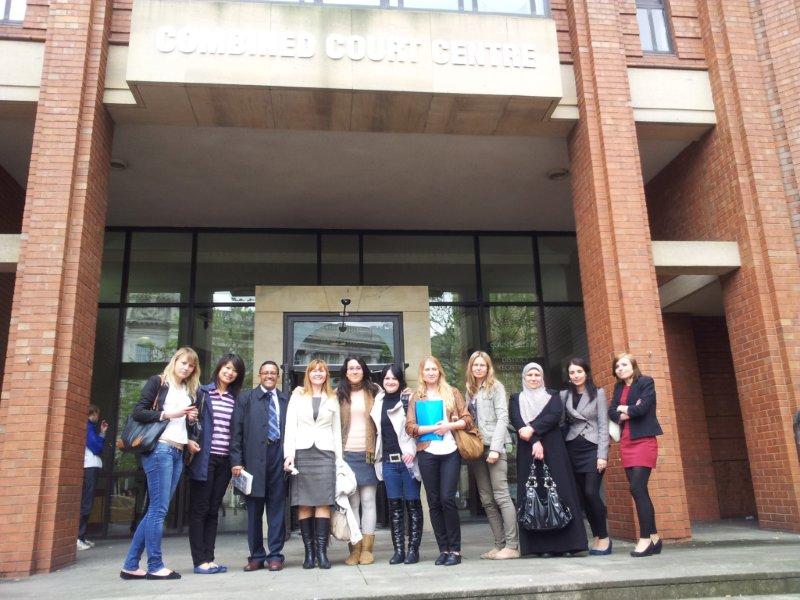
A unique feature of ICIT2 is its Day Two live court visit — students observe and practise in a real court environment, an experience most training programmes simply do not offer.



Curriculum
Course Units
ICIT2 covers seven core units spanning professional ethics, practical interpreting techniques and sector-specific application. Each unit combines taught input with applied activities.
Interpreters' Qualities & Professional Skills
Memory, impartiality, professional presence and managing interpreting stress — what makes a competent interpreter beyond language ability.
Code of Practice & Professional Ethics
The interpreter's code of conduct, confidentiality obligations, impartiality, role boundaries and when to intervene — or not.
Consecutive, Simultaneous & Telephone Interpreting
Introduction to the three primary interpreting modes: when to use each, their technical demands, and practice in controlled exercises.
Sight & Written Translation Techniques
Sight translation technique; written translation accuracy, register and cultural transfer — the difference between interpreting and translation.
Idioms, Metaphors & Complex Expressions
How to handle language that cannot be translated literally — idiomatic expressions, proverbs, legal formulae and culturally-bound references.
Legal Sector: Live Court Visit
Court structure, the interpreter's role in proceedings, courtroom protocol — and a live visit to observe and practise in a real legal environment.
Health Sector Requirements
Interpreting in NHS and healthcare settings — terminology, patient confidentiality, working with clinicians, and the demands of medical interpreting.
Programme Structure
How the two days unfold
The course begins with a focused induction session and then moves through two full days of teaching, practical activity and specialist application.
Welcome & Orientation
Introduction to the course, instructor and fellow participants. Overview of the full programme and what to expect from each session.
Teaching Approach & Assignments
Introduction to the brain-based teaching methodology used throughout. Day One assignments distributed and explained.
Foundations of Interpreting & Translation
Student presentations introducing interpreting theory and the distinction between interpreting and translation. Group discussion on the interpreter's role in public sector settings.
Professional Ethics & Code of Conduct
The interpreting code of practice — impartiality, confidentiality, role boundaries and professional behaviour. Case studies and group discussion.
Interpreting Modes — Practical
Practical introduction to consecutive, simultaneous and telephone interpreting. Pair and group role-play exercises to develop technique and confidence.
Translation, Idioms & Cultural Expression
Sight translation exercises. Tackling idioms, metaphors and non-literal language. Health sector terminology and patient communication scenarios.
Legal Interpreting — Classroom Session
The interpreter's role in the justice system. Court structure, legal terminology, PACE interviews, courtroom protocol. Preparation for the court visit.
⚖️ Live Court Visit
Students visit a local court to observe proceedings and develop essential skills for court interpreting in a real environment.

Live Court Visit
Day Two · Unique to ICIT2
Advanced Role-Plays & Consolidation
Applied role-play scenarios drawing on all course material — court, police, NHS and community settings. Feedback and individual coaching.
Conclusion & Certificates
Group reflection, Q&A, next steps for professional development, and certificate of completion for all participants.
Pedagogy
How we teach
ICIT2 uses brain-based teaching methods informed by the latest research in neuroscience and adult learning — designed to maximise retention, confidence and practical capability.
Role-Plays & Simulation
Realistic scenario-based exercises simulating court, police, NHS and community interpreting situations — building confidence through practice, not just theory.
Group & Pair Activities
Collaborative exercises that build communication, active listening and peer feedback skills — mirroring the dynamics of professional interpreting environments.
Student Presentations
Participants research and present short topical presentations, developing subject knowledge and the public-speaking confidence essential for professional interpreting.
Topical Research
Guided research tasks between sessions that build sector vocabulary, reinforce learning and develop independent professional development habits.
Technology-Enhanced Learning
Generous use of technology — including internet research, audio and video materials — to enrich learning and reflect the digital environments interpreters work in.
Live Court Visit
The only way to truly prepare for court interpreting is to experience a court. Day Two includes a live visit that no classroom exercise can replicate.
Who Should Attend
Entry requirements & expectations
ICIT2 is designed for those at the beginning of their interpreting career, or those with informal experience looking to formalise and extend their skills. No formal interpreting qualification is required to attend.
- Basic literacy skills in your working language pair(s)
- Ability to put together a short presentation (we guide you through this)
- Willingness to work as part of a team and participate actively
- Basic computing skills — using the internet and PowerPoint will help
- An open mind: the best interpreters are curious, observant and reflective
- No previous formal interpreting qualification required
Your Instructor
Taught by a practitioner

Rakesh Khambhaita
Founder, Beyond Translation · Lead Instructor
Rakesh brings over 15 years of active experience as a court, police and public sector interpreter to the ICIT2 programme. He developed the course because he saw, first-hand, how inadequately prepared many interpreters entering the profession were — and the consequences for the people depending on them.
Every element — the sequence, the exercises, the court visit, the ethics discussions — reflects what Rakesh has learned from real assignments in Crown Courts, PACE interviews, NHS consultations and community settings across North London and beyond.
What Students Said
Real feedback from real students
Unedited feedback collected from students who completed the ICIT2 course at Goodwin Development Trust.


"This was by far, the most informative, innovative and entertaining course I have experienced over the years. Every minute taught all of us something new in a very approachable style. I definitely want to give all the credits to Rakesh, for the way he conducted this course."
"It was a very fun course to be a part of. It gave me so much more knowledge about the world of interpreting, and the teaching methods used were fantastic. I liked that everyone had to get involved in everything we did. It was far more interactive than any other course I have been on."
"I have very much enjoyed my time at the training. It was organised in a fun and enjoyable way with a good mixture of various activities. Everyone was asked to speak and was involved in the lecture — this made people more eager to attend and to refer others to this course."
"I have never had so much fun whilst studying! It was great to realise that learning can be fun, interesting yet useful and comprehensive. Appreciated that there was no pressure on people and we could learn new skills in a very relaxed environment with a help of an outstanding teacher. Loved the court visit too."
"Before starting the course, I thought it would be something typically boring. However, it was not. Our dynamic instructor brought into discussion a variety of ideas which were put into practice — this gave me the confidence one needs to work in the field of Translation and Interpretation."
"Interesting and valuable experience. The course was well designed and all knowledge received covered all possible issues one would face as an interpreter. New studying approaches were introduced which can also be adapted for self-learning. I was attracted by the lecturer's passion throughout the entire course."
"It was amazing. I gained more experience and new skills, found new friends, and became more confident. This course was different because we got life experience in reality — in real situations, not just by writing lots of information on paper."
"I liked the course. It has useful information and a solid knowledge base about interpreting. It makes me feel more confident, happy and proud of myself. The lecturer is knowledgeable and helpful and the atmosphere in class was friendly."